Raging against the machine
As artificial intelligence grows, Tennessee communities and political leaders confront the costs and compromises of expanding data centers.
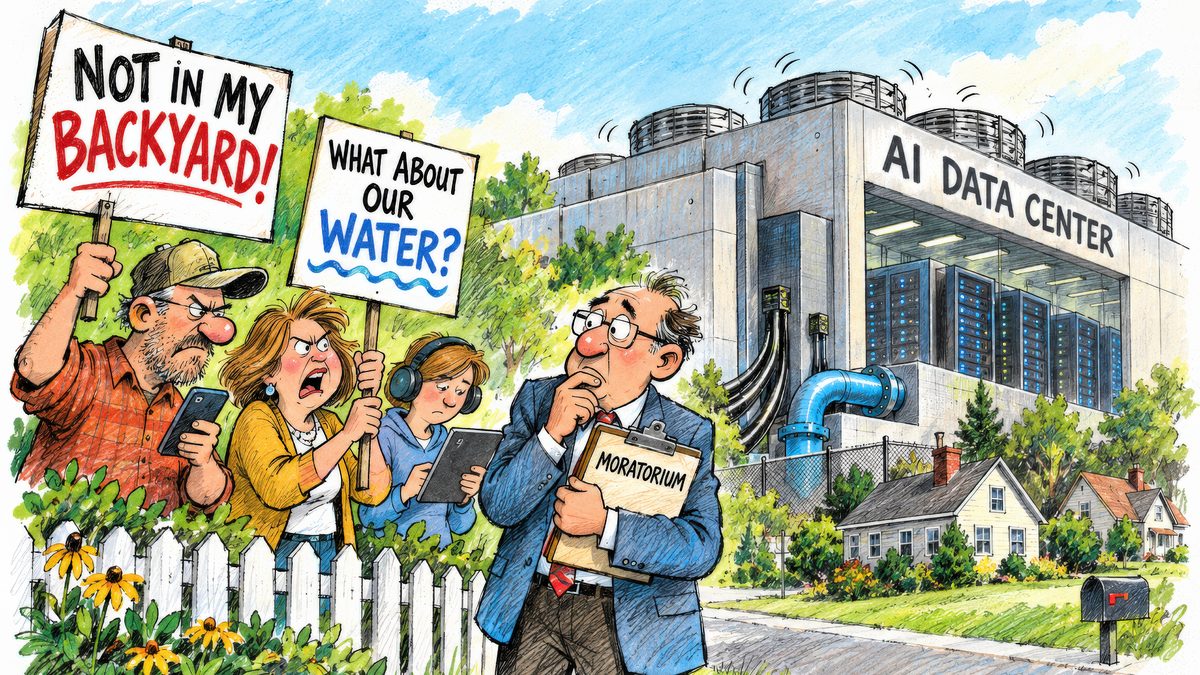
Rage against the AI data center machine is driving opposition to the technological facilities locally and nationally. Concerns about electric power and water consumption, noise, and size, are motivating people’s demands that the centers be kept far from their back yards. The centers are causing politicians to lead or follow the “no data center” sentiment. For now.
Data centers aren’t new. Tennessee as of this writing has 61 data centers, 11 of them in Knox County, according to the publication Tennessee Lookout. And not all of them are alike. A report by WATE-TV on data centers included an expert’s description of what they do: “’So, data centers are the backbone of the internet. If you watch something on Netflix, you stream something on Spotify: you are using a data center. But even if you’re just bouncing around, surfing the web as people used to say, or if you’re on Facebook or whatever, all of that information is housed in data centers, your Google Photos, Apple Photos, Google Drive, all of that. It’s literally the backbone of the digital world,’ said Marcus Blair of Omega Digital Solutions.”
Not all center opposition is home grown. AI is advancing data centers’ need and size, in part as America’s chief economic competitor ups the centers’ ante: China. China is said to be promoting anti-data center opposition in the U.S. “China is secretly fueling America’s data center rage,” the webpage Axios reports. “The X Safety team probed suspected Chinese accounts involved in influence operations and identified 200,000 accounts, including 200 accounts ‘posting in a manner that could manipulate a legitimate debate about American AI and energy policy,’ the team said in a tweet.”
China is planning to spend nearly $300 billion over the next five years to create a data center network across the country. If while building its own data centers China can engineer opposition to them within the U.S., the communist behemoth has the best of both worlds.
With lightning-speed advances in AI usage and development, the mega data centers, from 100,000 to 10 million square feet, have been growing to keep pace with digital demand, research, and development. This puts Tennesseans and their political leaders between competing interests: there are businesses and individuals who want more AI capabilities vs. those insisting on no new big data centers – or at least not near them. In the short term, local government delays are the safest course because it’s acting on today’s constituent concerns.
The Knoxville and Knox County Planning Commission over the summer approved a one-year moratorium on data centers, through June 30, 2027. This was after the Knoxville City Council and Knox County Commission each approved data center moratoriums – not that when the moratoriums were approved there were any pending data center requests. In the political world, a moratorium serves the same function as a legislative “study committee”: it allows for further research and it buys time (not necessarily in that order). The planning commission will develop zoning change recommendations.
Among the anti-data center protesters are no doubt people who oppose anything that even hints of touching on the environment. However, beyond knee-jerk protesting, alarm is either a matter of genuine anxiety about data centers’ impact or the fulfilment of an old Tennessee political saying: “If I ain’t up on it, I’m down on it.”
Less “down on it” will come from data centers duplicating computer development’s evolution. The first computers were enormous machines with miniscule computing power compared even to a 21st century child’s wristwatch. Correspondingly, brilliant minds are working to design data centers that are smaller, use less water and power, and more palatable environmentally. Such developments will smooth the path to approval.
Longer-range, businesses, the general population, and government itself, will need AI’s expanding capabilities. If not there, if commerce and personal use are curtailed or unavailable, taxpayers and voters will query political leaders why they didn’t see this coming, why they weren’t prepared, and why they didn’t work out an arrangement to ensure the data center need was met. In the end, compromises will be made. There’ll be some give, some take. Financial inducements from data center developers will be offered. Opposition won’t diminish, but the most intransigent will become outliers. There will still be some rage, but there’s need for the machines.