The Truth Doesn't Care Whether You Like It
On fly-fishing, faith, personal responsibility, and the physician's obligation to see the whole patient.
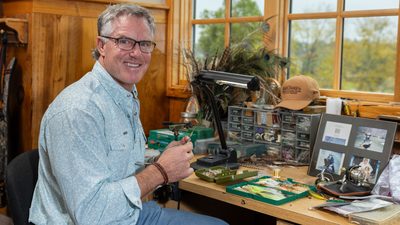
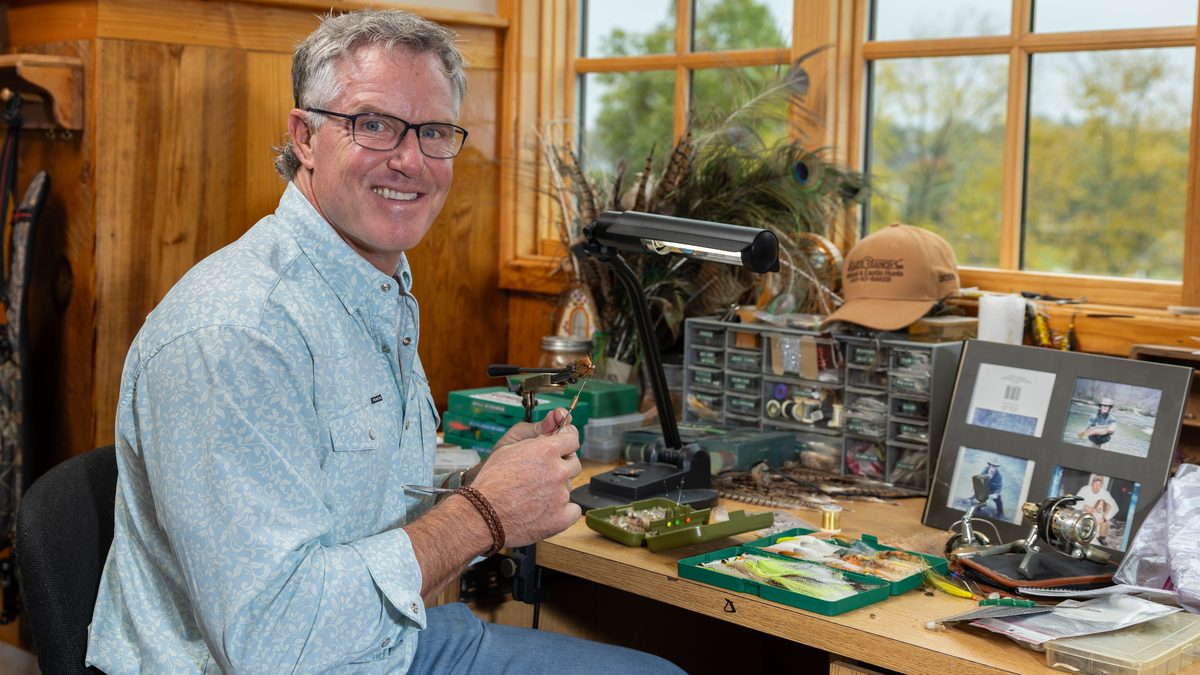
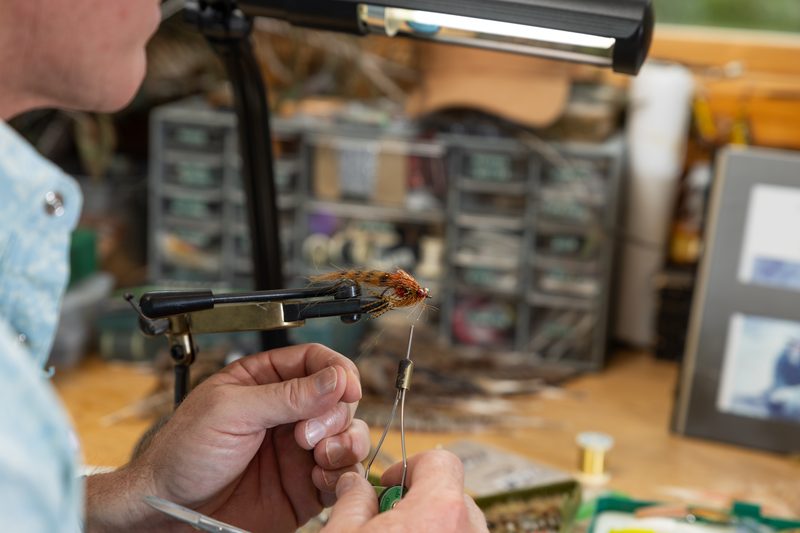
I have spent a fair amount of time trying to fool trout. Stand beside me in a stream and you will see how much preparation can go into a very small deception. I have studied the insect, chosen the materials, and tied a fly that I believe deserves a closer look. As it settles onto the water it begins to drift. For a moment, it moves naturally with the current. Then the line tightens, the fly unnaturally sways, and whatever interest I might have attracted disappears. I may be pleased with what I made, but the fish is responding to what I presented.
That distinction has occupied me well beyond the river. A fly can look perfect in my hand and fail in the water. The hours I spent tying it matter to me; they have no bearing on whether it or I behave convincingly. I can change the fly, adjust the line, or reconsider where I am standing. What I cannot do is persuade the trout to accept my intentions in place of the evidence. I enjoy a pursuit that keeps me honest, although I sometimes wish the honesty were a little less thorough.
We are much better at making allowances for ourselves. We explain why we haven’t exercised, why we are too busy to slow down, why the people we love will understand another evening surrendered to work. Often, the explanations are reasonable. Life is demanding, and responsibilities compete. But repeated often enough, a reasonable explanation can keep us from asking a necessary question: Is the way I am living taking me toward the life I say I want? That question interests me as a physician. It also asks something of me as a husband, a person of faith, and a human being with imperfections of my own.

Most of us don’t need someone to introduce us to every truth we have been avoiding. We already know something about the habit that is wearing us down, the relationship receiving too little` attention, or the promise we keep postponing. The difficulty is allowing that knowledge to interfere with a comfortable arrangement. Once we acknowledge a problem without immediately explaining it away, we have to decide what to do. Until then, we can remain cognitively dissonant busy discussing a better life while continuing to live the familiar one.
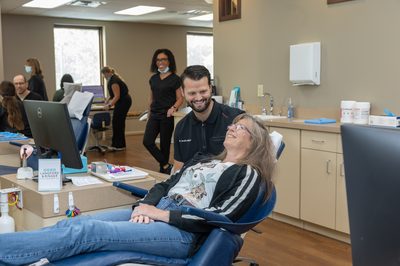
In medicine, that space between understanding and action has consequences. A patient may want less pain, greater mobility, or more energy while struggling to change habits that work against those goals. My responsibility includes saying so. If weight is contributing to joint pain, or poor sleep and inactivity or nutrition are concerns, they belong in the conversation. It would be easier to address only what someone wants to discuss. But a patient has come to me for help, and I owe that person more than an agreeable account of what is happening.
My job is not to make the truth comfortable. It is to make the truth useful.
I also owe them the effort of understanding why change is difficult. A person brings an entire life into the examination room: work, family, fears, finances, other illnesses, and experiences I may know nothing about. Genetics and circumstances matter. Illness is not an indictment of character, and difficulty following advice does not imply cognitive indifference. Before I offer perfunctory advice, I need to listen closely enough to understand what that advice will require of them.
My own thinking has needed adjustment here. I once regarded medication for weight loss too readily as a substitute for discipline. I stridently believed people should improve their nutrition and exercise habits, and I still believe that rubric forms the base. But I came to appreciate how overwhelming the beginning of that journey can feel to someone with a long way to go. It seems unattainable and the results in the mirror do not seem to reflect the work that has been put in. Appropriate medical help with a GLP may make progress feel possible. Those medically assisted wins gain buy in and confidence and gently cajole the patient to salutary healthy habits. GLPs are not the sole answer but a bridge to better health.

That is part of the physician’s obligation to truth: being willing to examine our own judgments as seriously as we examine a patient’s choices. Experience gives us knowledge, but it can also make a familiar conclusion feel more secure than it deserves. As it turns out our beliefs are not an unmitigated reflection of reality. When I don’t know, I have to acknowledge that. Patients should be able to trust that my interest in helping them is greater than my interest in defending an opinion I have already espoused.
The way we convey information matters just as much. There is a difference between helping someone face a difficult fact and making them feel diminished by it. My job is to make the truth useful: explain what I see, why it matters, and what can be done. A patient needs enough confidence in the relationship to admit, “I’m not managing this,” or “I haven’t done what we discussed.” If the truth earns only disapproval, I have made the next honest conversation harder. If it gives us a more accurate starting point, we can begin doing something worthwhile together.
No technology can replace understanding the person sitting across from you.
I want that conversation to reach beyond what is wrong. What does this person hope better health will make possible? More time with grandchildren? A return to work they enjoy? The ability to walk without planning every outing around discomfort? Those hopes give our recommendations meaning. We are caring for someone who wants to participate more fully in a life, and the treatment has to belong to that larger purpose. It is hard to understand what matters to a patient if I never get beyond the complaint that brought them through the door.
My interest in that broader picture grew from wanting to understand health more fully, for my patients and for myself. Orthopedic surgery gave me the opportunity to help people regain function, but the operation was never the whole of their experience. Recovery continued amid the habits and demands of ordinary life. I became increasingly interested in nutrition, exercise, and the things that influence how we feel and function every day. The more I learned, the more I wanted room to bring that understanding into the way I practiced.

Writing about those subjects for Cityview became part of that education. Nathan and I were getting to know each other on a fishing trip years ago when the possibility of a magazine story came up. I was doubtful about what difference it would make. The story led to writing about health and wellness, which required me to step outside the technical language of medicine and put more of myself into the work. Eventually, patients and others began talking about those articles and their subtle impact. A conversation beside a river had opened a door I hadn’t expected.
That experience reminded me that my own view of what was possible could be incomplete. It also helped carry an interest into something more practical. Concierge care offers an opportunity for the time, attention, and continuity I value in the relationship with a patient. The deeper question for me is whether my work reflects what I believe about caring for people. If I say the whole person matters, I have to make room for the whole person. Agreement with an ideal means very little until it begins influencing the decisions I am willing to make.
Information is not knowledge, and knowledge is not automatically wisdom.
I cannot reasonably confine that standard to my professional life. It is easy to encourage patients to exercise, protect their sleep, and take their health seriously. My advice carries a different weight when I make an effort to live by it. That doesn’t require perfection, but it does require honesty about the distance between my recommendations and my habits. I have to be careful about treating a demanding career as a standing exemption from responsibilities I would readily recognize in someone else’s life.
I try to begin each day with quiet time, prayer, and Bible study, and I try to do something physical every day. I like establishing that discipline before the day begins making other plans for me. These practices give time to things I believe matter; they also give me a chance to consider whether everything receiving my attention deserves so much of it. Work can expand almost without limit, particularly when you enjoy it and believe it serves a purpose. Family, health, and spiritual life still need more than whatever is left over.
My faith asks me to look honestly at that balance. It reminds me that my abilities carry responsibility, that achievement is only part of a life, and that the people around me deserve care that is visible in how I treat them. Prayer makes room for gratitude and for an examination of my own motives. Am I serving someone, or satisfying my need to accomplish more? Am I listening, or preparing to explain why I am right? Those questions are less comfortable than considering what everyone else ought to change, which is probably a reason to give them attention.
I find hope in that examination. Acknowledging where I fall short gives me something more useful than the obligation to appear as though I have everything settled. I can be grateful for help, correct a mistake, and begin again. Faith matters to me in those ordinary decisions as well as in life’s larger uncertainties. What I believe should be recognizable in the way I keep a commitment, respond to a difficulty, or make time for another person when it would be easier to remain occupied with myself.
Truth is not a trophy we put on a shelf. It is an ongoing practice of paying attention, testing assumptions, and correcting our course.
Of course, recognizing a truth doesn’t remove the difficulty of living by it. Familiar habits offer something: comfort, convenience, relief, the reassurance of knowing what comes next. Changing them may involve discomfort now for a benefit that feels distant. We have to be honest about that, too. Otherwise, we make promises without understanding what will challenge them. A useful beginning may be smaller than the sweeping resolution we would like to announce, but it has the advantage of being something we are prepared to practice. Consistency in those small wins has a far greater impact. Every action you take, not matter how small, is a vote for the person you wish to become.
Our actions become evidence for the people around us. They see whether we follow through, whether we acknowledge mistakes, and whether our concern for them survives inconvenience. Over time, those experiences give them reasons to trust us. We cannot simply ask to be regarded as dependable while treating our commitments as negotiable. The same is true in medicine, marriage, and friendship: the words matter, but the life accompanying them determines how much weight another person can safely place upon them.
We don't have to be perfect. We do have to be willing to learn.
Honesty also allows us to receive the help we need. There is a vulnerability in letting someone see where we are struggling, especially when we are accustomed to being capable or being the one others turn to. But a carefully maintained appearance can leave us alone with a problem someone else might help us face. We don’t have to tell everyone everything. We do need relationships in which we can stop managing the impression and speak plainly about what is happening.
That is where living truthfully begins to offer something beyond self-correction. We become more available to one another, more able to offer sound guidance and more willing to receive it. The truth may reveal a responsibility we have avoided, but it can also reveal that we do not have to carry it alone. I think that is a hopeful place to arrive, whether we are talking about health, faith, or the direction of a life.
Back in the stream, I gather the line and study the water before I make another cast. I still want the fly to land well and the trout to rise. But wanting the result has never relieved me of paying attention to what is actually happening. Away from the river, the work is more personal: to let what I know become visible in how I live, and to be honest enough to let someone stand beside me.